
Lieutenant General J F R Jacob, Chief of Staff, Eastern Army Command during the 1971 war, revealed how, armed with only a draft surrender document and an aide, he made the Pakistani army led by Lieutenant General A A K Niazi surrender.
Lieutenant General J F R Jacob, Chief of Staff, Eastern Army Command during the 1971 war, revealed how, armed with only a draft surrender document and an aide, he made the Pakistani army led by Lieutenant General A A K Niazi surrender.
Lieutenant General J F R Jacob, Chief of Staff, Eastern Army Command during the 1971 war, revealed how, armed with only a draft surrender document and an aide, he made the Pakistani army led by Lieutenant General A A K Niazi surrender.
Lieutenant General J F R Jacob, Chief of Staff, Eastern Army Command during the 1971 war, revealed how, armed with only a draft surrender document and an aide, he made the Pakistani army led by Lieutenant General A A K Niazi surrender.

There are no heroes or villains in No Fathers in Kashmir, but only helpless characters, who perhaps don't have a choice other than learning to live with what they're subjected to, notes Utkarsh Mishra.

'If India adopts a punitive and unforgiving stance against the Rohingyas, it will be courting disgrace,' says Amulya Ganguli.
Lieutenant General J F R Jacob, Chief of Staff, Eastern Army Command during the 1971 war, reveals how, armed with only a draft surrender document and an aide, he made the Pakistani army led by Lieutenant General A A K Niazi surrender.
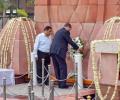
Modi's absence from an event to mark the centenary of a definitive moment in Indian history puzzles Utkarsh Mishra.

Did the human drama provoked by the Japanese invasion of Burma and the Indian exodus from Rangoon inspire director Vishal Bhardwaj's forthcoming epic?

'The Kashmiri identity and its unique blend of Sufi Islam, its culture and language can best survive in a plural and secular India.' 'Neither independence nor merger with Pakistan can achieve that objective.' 'Peace will return to Kashmir only when Kashmiris realise this, else they will be part of the 1,000- year war,' says Colonel Anil A Athale (retd).
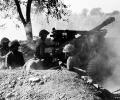
'My brave JCO managed to get to the gun, sit on top of the dead man and fired away at the attacking aircraft till they melted away into the darkness.'

'As far as acquisition of Russian equipment is concerned, with about 70% of Indian military equipment being of Russian origin, a sudden decision to abandon imports from Russia is not feasible,' points out Brigadier S K Chatterji (retd).

Evacuation of people from the family quarters is in progress.

Just 21 then, a young air force officer looks back at the 1971 war, which was like a baptism by fire in the fauj.

'Chest-thumping on-air theatrics on television are no consolation for families who've been forced to embrace the price of war,' notes Nikita Puri.

At a time when China is trying to make its foray into South Asia, India should use its shared history to strengthen its ties in the region, says Dr Rup Narayan Das.

'When there are two hostile armies operating in close proximity, moral ascendancy is very important -- and that is something, I think, we achieved.' 'What is important is the will and determination of a country.' 'That you are willing to do something about terror that is coming from across the border and that is the message that was sent out.'

'Notwithstanding the realisation among the Indian leadership to build up its navy for the force's expanding role, the Indian Navy was allocated only 15% of the interim defence budget presented in Parliament in February 2019.' 'The outlay for the navy's capital acquisition is not even adequate to meet its committed liabilities,' points out Brigadier S K Chatterji (retd).

'Unless you capture territory and plant your flag, the war is never won.'

'Had they struck on the night of the 1st, there would have been hell to pay and had they been able to sneak further in, we would have had a greater problem,' says Lieutenant General H S Panag (retd), the former Northern Army Commander.

How to deal with a country that has made export of terror a reason to make the world notice and fund it? Rediff.com contributor Sanjeev Nayyar offers a few suggestions

'If chutzpah nationalists brought the Babri Masjid down, chutzpah secularists did precious little to stop it from being torn down.' 'If chutzpah nationalists ensured carnage in Gujarat, chutzpah secularists allowed Muzaffarnagar to become their next hunting ground.' 'Chutzpah secularists readily banned SIMI, but dragged their feet when it came to banning the Bajrang Dal.'
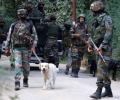
'What has changed is the desperation of Pakistan proxies and the separatists in their failure to foment violence and civilian casualties in Kashmir.'

The British administration ignored the mounting evidence of violence between Hindus and Muslims... Military historian Barney White-Spunner traces the countdown to the tragedy in his book, Partition.

50 years after the 1965 War, India still thinks we can have a 'limited war' when our opponent has time and again shown it does not believe in a limited war, says Colonel Anil A Athale (retd).

'News is rife that Pakistan will attack the next day. They have no idea that this is where they will take on the might of 1 Armoured Division of Pakistan in a three-day bloody battle that will be remembered in military history as the Battle of Asal Uttar.' Rachna Bisht Rawat salutes the brave men turned the tide of the '65 war.
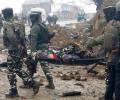
'Definitely, they are going to attempt this, not only in Kashmir but elsewhere, maybe in the Jammu area and beyond.' 'They would want to expand the battle space and the conflict area.'

'There will be no more lapses in vigil. Not for the men who will now have to guard these frozen heights.'

'War, and proxy war, demand and always extract a price -- from both sides.' 'But how do you make a neighbour, who will simply not stop provoking, and the jingoists see this.'

People who had fled from the villages located close to the site of June 4 ambush on Armymen in Manipur's Chandel district have started to return home.

It is well-known, and the Brooks-Bhagat report vouches for it, that the real failure for the 1962 debacle against China was not military, but political, says Ram Madhav.
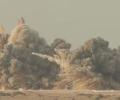
'A conventional war is not in fashion today and not seen as being able to deliver the objective.' 'Perhaps surgical strikes that are deeper, this time not on Pakistan's terrorist facilities, but on Pakistan army facilities.' 'The nation has to be prepared for losses.' 'War is not something that can be pussyfooted around.' 'If we go for limited number of posts in Kashmir, these are very difficult posts to capture and very difficult operations.' 'Be prepared for 200 to 300 killed.'

'He was believed to finish his own work in an hour and spend the remainder of the time walking from one office to another, sitting down with the harried junior staff and helping them sort out the problems they were working on.'

The colour has been rendered to activities that would have astonished Swami Vivekananda, says Sunanda K Datta Ray.
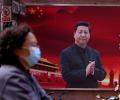
China has not limited the 'battle' to the diplomatic field alone; the People's Liberation Army has become aggressive on the ground too. The recent 'fights' in Northern Sikkim and Ladakh are part of the pattern, asserts Claude Arpi.

At war, the Jalashwa can carry and launch a full infantry battalion in a single wave. At peace, the Jalashwa can evacuate 1,000 people in a single trip. Ajai Shukla explains why the Indian Navy's new tender for more ships like the Jalashwa must be treated with special urgency.

The government on Monday faced flak for the Uri terror attack with both the Opposition and the Bharatiya Janata Party's ally in Maharashtra, Shiv Sena taking a dig at Prime Minister Narendra Modi and Defence Minister Manohar Parrikar.

Mere shuffling of resources or cosmetic changes to prove a point would be counterproductive in the long run, observes Commodore Venugoptal Menon (retd).

'What we are today witnessing is the final act of the Pakistani army trying to retain its turf,' argues Colonel Anil A Athale (retd).

'What Modisaab will accomplish by tampering with the treaty is providing ammunition to ultra-nationalist right wing elements within Pakistan who see India as an existential threat.'
